

Description
Understanding High-Purity LSD in Blotter Form
Welcome to Psychedelics Mushroom UK, your trusted source for premium research chemicals. We are proud to offer our Albert Hofmann 250UG 200TABS – meticulously manufactured research material intended for laboratory and forensic applications tab of acid. This product is available exclusively to qualified researchers with appropriate Home Office licensing.
Understanding LSD Blotters and the Tab of Acid
What is a Tab of Acid?
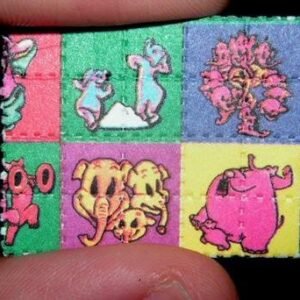
A tab of acid refers to a single dose of LSD (lysergic acid diethylamide) contained on a small square of absorbent blotter paper . The term “tab” originated from the tablet form of drugs but has evolved to describe the small cut sections of LSD-impregnated paper tab of acid. Each tab typically contains between 30-100 µg, though research-grade materials like this product offer precise 250 µg dosing for controlled laboratory applications .
LSD and Its Forms
LSD is a semi-synthetic drug derived from lysergic acid, found naturally in ergot fungus . It is one of the most potent hallucinogens known, producing significant effects at very small doses . In its pure form, LSD is a colourless, odourless liquid that is typically dissolved and absorbed onto blotter paper to create dosage units .
Blotter Paper: The Standard LSD Carrier
Blotter paper is a highly absorbent paper originally designed for fountain pen use. The absorbent qualities make it ideal for creating LSD doses – the liquid LSD solution is soaked into the paper, and when the solvent evaporates, the LSD remains embedded in the fibres tab of acid . A typical sheet of blotter paper is perforated into small squares called tabs, with each tab representing a single dose.
Product Specifications
-
Product Name: Albert Hofmann 250UG 200TABS
-
Total Units: 200 blotters
-
Dosage Per Unit: 250 µg (0.25 mg)
-
Total Content: 50,000 µg (50 mg)
-
Form: Blotter paper tabs
-
Quality: Research-grade material
Dosage Reference for Researchers
LSD is measured in micrograms (µg). The following dosage ranges are established reference points for research applications:
| Effect Level | Dosage Range |
|---|---|
| Threshold | 10-20 µg |
| Light | 20-75 µg |
| Common | 50-150 µg |
| Strong | 150-400 µg |
| Heavy | 400+ µg |
Research Applications
Scientific Interest in LSD
LSD functions as a partial serotonin-2A (5-HT2A) receptor agonist, making it a valuable tool for research into receptor binding and neurological pathways. Research applications include:
-
Receptor Binding Studies: LSD’s interaction with serotonin receptor subtypes
-
Pharmacological Research: Studies into the mechanism of action of psychedelic compounds
-
Forensic Toxicology: Analytical reference standards for detection methods
-
Behavioural Studies: Controlled research into the effects of serotonergic compounds
Clinical Research Context
A growing number of clinical trials have shown that psychedelic drugs (such as LSD), tab of acid in combination with therapy, can be used to treat mental health conditions such as PTSD and depression. The Royal College of Psychiatrists has called for more research into psychedelics and related substances within clinical settings to address concerns around safety, efficacy, and long-term use.
Forensic Detection
LSD on blotter paper poses significant challenges for law enforcement due to its potent effects and low required dose. Sensitive field detection methods are critical for forensic applications.
Common Questions About LSD Blotters
What is a tab of acid?
A tab of acid is a small square of blotter paper that has been soaked with a solution containing lysergic acid diethylamide (LSD). tab of acid Each tab represents a single dose of the drug .
What is the typical dosage of an acid tab?
Dosages vary, but this product contains 250 µg per tab. Common street doses typically range from 30-100 µg per tab .
Why is it called a tab?
The term “tab” originally referred to a tablet form of drugs but has evolved to describe the small cut sections of LSD-impregnated paper . Other common terms include hit, dose, and blotter .
What does “Albert Hofmann” refer to?
Albert Hofmann was the Swiss chemist who first synthesised LSD in 1938 and discovered its psychoactive properties. This product is named in his honour.
What are the research applications?
LSD is studied for receptor binding, neurological pathways, forensic toxicology, and pharmacological research.
Important Legal Notice – UK Compliance
UK Legal Status
In the United Kingdom, LSD is classified as a Class A controlled substance under the Misuse of Drugs Act 1971 and is placed in Schedule 1 of the Misuse of Drugs Regulations 2001. Schedule 1 drugs are considered to have no recognised medicinal use. Penalties include:
-
Possession: Up to 7 years imprisonment and an unlimited fine
-
Production and Supply: Up to life imprisonment
Research Requirements
Researchers must hold a controlled drugs licence from the Home Office to possess, supply, or administer LSD. This is required even when ethical approvals are already in place.
Why Choose Psychedelics Mushroom UK for Your LSD Research Needs?
At Psychedelics Mushroom UK, we are committed to providing the highest quality research chemicals available in the UK market. tab of acid Our LSD blotters are:
-
High Purity: Research-grade quality for reliable results
-
Precise Dosage: Accurate 250 µg units for reproducible research
-
Quality Assured: Each batch is rigorously tested
-
Compliant: Available only to licensed researchers with appropriate authorisation
Reviews
There are no reviews yet.