
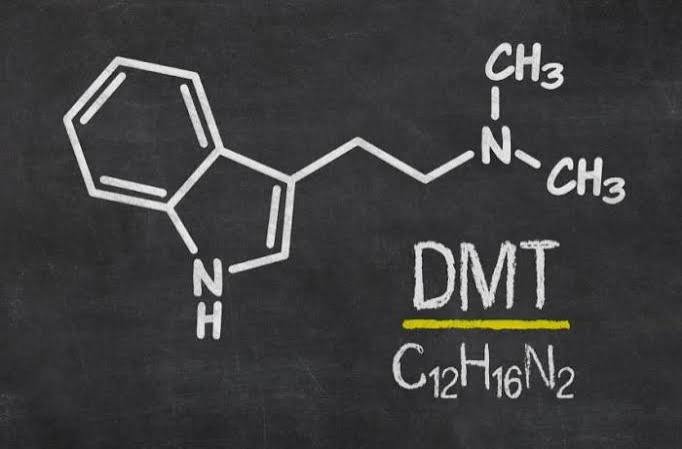
DMT is one of the most well-known psychedelic compounds in modern drug culture and scientific research. The name is short for N,N-dimethyltryptamine, a naturally occurring psychedelic compound that belongs to the tryptamine family.
People searching online for dmt for sale may encounter everything from educational information and scientific research to commercial-looking websites and anecdotal reports. However, understanding what DMT actually is, how it can affect people, its potential risks and its legal status in the UK is much more important than relying on marketing claims.
This complete guide explains what DMT is, why it produces such an unusual psychedelic experience, how DMT relates to substances such as ayahuasca and psilocybin, what researchers know about its effects, and what UK readers should know about its legal status.
What Is DMT?
DMT, or N,N-dimethyltryptamine, is a powerful psychedelic compound belonging to the tryptamine class.
It occurs naturally in a number of plants and has a long history of association with traditional South American preparations. DMT has also become an important subject of modern psychedelic research.
Unlike some psychedelics that can produce relatively long-lasting experiences, DMT is commonly associated with an intense and comparatively short-lived psychedelic state when administered in certain ways.
The experience can involve profound changes in visual perception, awareness, emotions, body perception and the sense of time.
DMT is sometimes described as producing an unusually immersive psychedelic experience. People can report vivid geometric imagery, rapidly changing environments and a dramatically altered sense of reality.
However, experiences are highly individual and cannot be guaranteed by a particular product name or description.
What Does DMT Stand For?
DMT stands for N,N-dimethyltryptamine.
The compound belongs to a chemical family known as tryptamines. Other compounds in the broader tryptamine family include serotonin and several naturally occurring psychedelic substances.
DMT’s chemical structure allows it to interact with serotonin receptors in the brain, particularly the 5-HT2A receptor, which is strongly associated with the effects of classic psychedelics.
This interaction is one of the reasons DMT can produce profound changes in perception and consciousness.
Is DMT Naturally Occurring?
Yes.
DMT has been identified in various plants and has a long history of traditional use in preparations associated with Amazonian and South American cultures.
The existence of naturally occurring DMT sometimes leads to the misconception that it must therefore be harmless or legal.
Those are separate questions.
A substance being naturally occurring does not automatically make it safe, medically appropriate or legal. Many naturally occurring substances can have powerful biological effects.
This distinction is particularly important for people searching for dmt for sale, because a seller’s description of a substance as “natural” does not establish its safety or legality.
How Does DMT Affect the Brain?
DMT is considered a classic serotonergic psychedelic.
Its effects are strongly associated with interactions with serotonin receptors, particularly 5-HT2A receptors. These receptors are involved in perception, cognition and several aspects of information processing.
When psychedelic compounds influence these systems, ordinary patterns of perception and thought can become significantly altered.
Researchers are still investigating precisely how these changes produce the highly unusual subjective experiences associated with DMT.
The experience may include:
- Intense visual imagery
- Altered perception of space
- Distorted perception of time
- Changes in body awareness
- Rapidly changing thoughts
- Strong emotional reactions
- A sense of entering an unfamiliar environment
- Alterations in the normal sense of self
Scientific explanations continue to develop, and subjective experiences should not automatically be interpreted as evidence of a supernatural event.
What Does a DMT Experience Feel Like?
DMT is often described as producing a remarkably intense psychedelic experience.
Visual effects can become extremely prominent. People may report complex geometric patterns, unusual colours, rapidly changing scenes and apparently immersive environments.
The sense of time can also change dramatically.
A relatively short period of clock time may feel much longer from the person’s subjective perspective.
Some individuals describe encountering apparently autonomous entities or beings during intense psychedelic experiences. These reports are a fascinating subject in psychedelic anthropology and neuroscience, but the experiences themselves do not establish that independently existing entities were objectively present.
The psychological interpretation of a DMT experience can vary greatly from one person to another.
DMT and the Sense of Self
One particularly interesting aspect of psychedelic research is the effect these substances can have on the sense of self.
Ordinarily, people experience themselves as a continuous individual moving through time and space.
During an intense psychedelic state, this normal experience can become disrupted.
Some people report feeling detached from their normal identity, while others describe a sensation of merging with their surroundings or experiencing consciousness in an unfamiliar way.
Researchers sometimes discuss these experiences in terms of altered self-processing or ego dissolution.
Such experiences can be fascinating, but they can also be frightening or overwhelming.
How Long Does DMT Last?
The duration of a DMT experience depends on factors including the form of DMT, how it enters the body and individual circumstances.
Some forms of DMT exposure are associated with a rapid onset and comparatively short period of intense effects.
This relatively short duration is one reason DMT is sometimes described differently from longer-lasting psychedelics.
However, “short” does not mean insignificant.
An intense psychedelic experience can feel extremely prolonged from the person’s subjective perspective, even when the measurable duration is relatively brief.
After-effects can also continue after the strongest psychedelic effects have diminished.
DMT vs Ayahuasca
DMT and ayahuasca are closely connected but are not the same thing.
Ayahuasca is traditionally prepared as a plant-based brew containing DMT alongside other compounds that affect how DMT is metabolised.
The presence of these additional compounds changes the pharmacological profile and duration of the experience.
This is why discussions of DMT vs ayahuasca should avoid treating them as interchangeable.
Ayahuasca also has significant cultural and religious contexts, particularly within South American traditions.
People researching dmt for sale may encounter ayahuasca references online, but the two should be understood as distinct subjects rather than simply different names for the same substance.
DMT vs Psilocybin
DMT and psilocybin are both classic psychedelics and have similarities in how they interact with serotonin receptors.
However, they are chemically distinct substances and can produce substantially different experiences.
Psilocybin is naturally associated with certain fungi, while DMT occurs in various plants and can also be produced synthetically.
The subjective duration and character of their effects can differ considerably.
Neither substance should be assumed to produce a predictable experience based simply on descriptions found online.
Is DMT Addictive?
DMT is not generally regarded as producing the same physical dependence associated with substances such as opioids or nicotine.
However, this does not mean that DMT is completely risk-free.
Researchers continue to investigate the potential for problematic use and longer-term psychological effects.
NIDA notes that the addictive potential of DMT remains an area requiring further research.
Psychological reactions can also be significant, particularly when a person is already experiencing mental health difficulties or enters the experience with unrealistic expectations.
Potential DMT Risks and Side Effects
DMT can produce both psychological and physical effects.
Reported physical effects can include increased heart rate, increased blood pressure, agitation, dizziness and other physiological changes.
Psychological effects can include:
- Anxiety
- Confusion
- Panic
- Disorientation
- Intense emotional reactions
- Altered perception of reality
- Depersonalisation
- Disturbing or frightening imagery
The intensity of these effects means that DMT should not be regarded as an ordinary recreational substance.
Anyone experiencing severe or unexpected symptoms should seek appropriate medical assistance.
Why Purity and Identification Matter
One significant issue surrounding illicit psychoactive substances is uncertainty about what a product actually contains.
A label, photograph or online product description cannot by itself establish chemical identity or purity.
This matters when people search for phrases such as dmt for sale, because internet listings can make products appear more predictable than they actually are.
A commercial description may claim that a substance is “pure,” “premium” or “high quality,” but those terms do not constitute independent laboratory verification.
This is one reason why online drug markets can present additional risks beyond the pharmacological effects of the substance itself.
DMT and Mental Health
Psychedelic experiences can be psychologically demanding.
People can experience intense emotions, unusual thoughts and significant alterations in their perception of reality.
Individuals with certain psychiatric vulnerabilities may face greater risks from psychedelic substances.
Anyone with concerns about an existing mental health condition, psychiatric history or medication should speak with an appropriately qualified healthcare professional rather than relying on online advice.
This is especially important because psychedelic research conducted in clinical settings typically includes screening, supervision and controlled environments.
Clinical research should not be confused with unsupervised use.
What Does DMT Research Say?
DMT is an active area of psychedelic research.
Scientists are interested in understanding how DMT affects the brain, why it can produce unusually immersive experiences and how psychedelic states relate to consciousness.
Research into psychedelics has expanded substantially over recent years, with studies examining questions involving perception, brain activity, subjective experience and potential therapeutic applications.
However, promising research does not mean that DMT is an approved treatment for every condition.
There is an important difference between studying a substance under controlled conditions and obtaining an unregulated substance from an unknown source.
DMT and Consciousness Research
One reason DMT attracts scientific attention is the unusual character of the experiences it can produce.
Researchers interested in consciousness can use altered states as one way of investigating how the brain constructs perception, self-awareness and the experience of reality.
DMT experiences can challenge ordinary assumptions about how stable and consistent consciousness feels.
Some researchers are particularly interested in reports of complex environments and seemingly independent entities.
These experiences raise fascinating scientific questions, but many explanations remain hypothetical.
It is therefore important to distinguish established neuroscience from personal interpretations of psychedelic experiences.
Is DMT Legal in the UK?
For UK readers, this is one of the most important questions.
N,N-dimethyltryptamine (DMT) is controlled as a Class A drug in the UK. The current UK government’s controlled-drug list specifically identifies N,N-dimethyltryptamine (DMT) as Class A and Schedule 1.
UK government guidance explains that penalties can apply to possession, production, supply and other activities involving controlled drugs. For Class A substances, the potential penalties can be severe.
Therefore, people searching for dmt for sale UK should not assume that an online listing means that buying, possessing, importing or supplying DMT is lawful.
A seller’s claim that a substance is legal does not override UK legislation.
The legal position can also differ between countries, so information from American or other international websites should not automatically be applied to the UK.
Can You Buy DMT Legally in the UK?
For ordinary consumers, DMT is not a legal retail product in the UK.
The fact that someone may encounter websites advertising dmt for sale does not establish that those transactions are lawful.
DMT is listed as a Class A controlled drug in the UK’s current controlled-drug information.
Anyone researching the subject should therefore distinguish between:
- Educational information about DMT
- Scientific research involving DMT
- Traditional cultural use
- Illegal recreational markets
- Lawful research involving controlled substances
These are not interchangeable categories.
Why Online DMT Information Can Be Misleading
Search results for dmt for sale can contain a mixture of genuine educational information, personal stories and commercial claims.
Some pages may describe DMT as completely safe because it occurs naturally. Others may present it as inherently dangerous.
Neither extreme provides a complete picture.
A better approach is to consider the available evidence, acknowledge uncertainty and understand the legal framework.
Important questions include:
- Is the source reputable?
- Is the claim supported by research?
- Is the information current?
- Is the source discussing medical research or recreational use?
- Does the source distinguish evidence from anecdotal reports?
- Does the information apply to UK law?
These questions can make online research considerably more reliable.
Final Thoughts
DMT is a fascinating and unusually powerful psychedelic compound that sits at the intersection of chemistry, neuroscience, traditional culture and modern psychedelic research.
Its effects can involve dramatic changes in visual perception, consciousness, time, emotions and the sense of self. At the same time, the intensity of the experience means that DMT should not be treated casually.
For people searching dmt for sale, it is particularly important to distinguish online marketing from reliable information. In the UK, N,N-dimethyltryptamine is a Class A controlled drug, and UK law places serious restrictions on its possession, production and supply.
The scientific study of DMT continues to raise important questions about the brain and consciousness, but ongoing research should not be confused with approval for unrestricted recreational use.
The safest approach to researching DMT is to rely on credible scientific and UK government sources, understand the potential psychological and physical risks, and avoid assuming that online product descriptions accurately represent a substance’s identity, purity, effects or legal status.
Educational disclaimer: This article is provided for informational and harm-reduction purposes. It does not encourage the purchase, possession, production, importation, supply or consumption of DMT or any other controlled substance, and it is not a substitute for professional medical or legal advice.
Frequently Asked Questions About DMT
What is DMT?
DMT stands for N,N-dimethyltryptamine. It is a powerful psychedelic compound belonging to the tryptamine family and is found naturally in several plants.
What does DMT do?
DMT can produce profound alterations in perception, consciousness, visual experience, emotions, time perception and sense of self.
Is DMT the same as ayahuasca?
No. DMT is a chemical compound, while ayahuasca is a traditional plant-based preparation that can contain DMT together with other compounds.
How long does a DMT experience last?
The duration varies according to the form and circumstances of exposure. Some forms are associated with rapid-onset and comparatively short-lived intense effects.
Is DMT legal in the UK?
N,N-dimethyltryptamine is controlled as a Class A drug in the UK.
Is DMT addictive?
DMT is not generally considered physically addictive in the same way as substances such as opioids or nicotine, but its potential for problematic use and longer-term effects continues to require research.
Is DMT being studied scientifically?
Yes. Researchers study DMT and other psychedelics to better understand consciousness, perception, brain function and potential therapeutic applications.
Is DMT safe because it occurs naturally?
No. Natural origin does not automatically mean that a substance is safe, appropriate for everyone or legal.