
Description
Ecuador Spores – Mycology and Scientific Background
Ecuador has a documented place in the scientific study of fungi belonging to the genus Psilocybe. The phrase Ecuador Spores is sometimes used informally in discussions of geographically named fungal collections. It is important, however, to distinguish a geographical label from a scientifically verified species identification or specimen origin.
This educational guide examines published records of Psilocybe in Ecuador, fungal classification, spore biology and the limitations of geographical variety names.
Ecuador Spores and Mycological Research
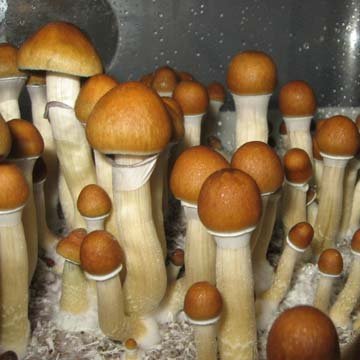
Scientific research has documented several Psilocybe species in Ecuador. A notable study published in 2021 recorded Psilocybe cubensis in the country’s highland grasslands.
The researchers provided macroscopic and microscopic descriptions and discussed similarities with related species. The publication is significant because it added a documented Ecuadorian record to the scientific literature.
A geographical designation such as Ecuador should not automatically be interpreted as proof that an individual specimen originated from a particular region.
Scientific Classification
Psilocybe cubensis belongs to the fungal kingdom and the phylum Basidiomycota.
Its broad classification is:
- Kingdom: Fungi
- Phylum: Basidiomycota
- Class: Agaricomycetes
- Order: Agaricales
- Family: Hymenogastraceae
- Genus: Psilocybe
- Species: Psilocybe cubensis
The genus Psilocybe contains multiple species. Correct identification requires scientific evidence rather than reliance on a geographical name or informal variety label.
Understanding Fungal Spore Biology
Fungal spores are reproductive structures involved in the biological life cycles of fungi.
In basidiomycete fungi, including Psilocybe, sexual spores are called basidiospores. They develop on specialised microscopic structures known as basidia.
Mycologists study spore characteristics alongside other features to investigate fungal diversity, classification and evolutionary relationships.
Microscopic observations can contribute valuable evidence, but they do not always provide sufficient information to distinguish closely related species independently.
Ecuadorian Fungal Diversity
Ecuador’s varied geography includes coastal environments, highland grasslands, cloud forests and Amazonian ecosystems. These different habitats support a wide range of fungal biodiversity.
Published fungal records are important because they establish documented observations that can be compared with future research. Herbarium collections, scientific descriptions and verified specimen records help researchers build a more reliable understanding of regional fungal diversity.
The 2021 Ecuadorian study is one example of how targeted taxonomic research can expand knowledge of fungi in the region.
Related Species and Identification Challenges
The Ecuadorian research discussed similarities between Psilocybe cubensis and related species, including Psilocybe subcubensis and Psilocybe aquamarina.
These comparisons demonstrate why fungal identification can be complex. Species may share visible characteristics while differing in microscopic or other taxonomic features.
Scientific identification can involve:
- Macroscopic examination
- Microscopic characteristics
- Documented collection information
- Comparison with published descriptions
- Molecular evidence where available
A geographical label alone is not enough to establish a specimen’s identity.
Scientific Research and Taxonomic Reliability
Research into Psilocybe has highlighted challenges involving incomplete specimen records, inaccurate identifications and limitations in publicly available genetic data.
These issues make careful scientific documentation particularly important. Researchers need traceable specimens and reliable identification methods to establish meaningful comparisons between fungal populations.
Informal names can have historical or community significance, but they should not be confused with formally accepted taxonomic classifications.
UK Legal Considerations
The legal status of psilocybin-related fungi is important when researching this subject.
In the United Kingdom, psilocybin and psilocin are controlled substances under the Misuse of Drugs Act 1971. The legal position of spores and any associated activity should not be assumed from a geographical label or product description.
Anyone researching this area should consult current UK legislation and appropriate legal guidance.
Frequently Asked Questions
Has Psilocybe cubensis been documented in Ecuador?
Yes. A scientific paper published in 2021 recorded the species in Ecuadorian highland grasslands and provided macroscopic and microscopic descriptions.
Does the name Ecuador prove where a specimen originated?
No. A geographical name does not independently establish the provenance of an individual specimen. Reliable documentation is required.
What are basidiospores?
Basidiospores are sexual reproductive structures produced by fungi in the phylum Basidiomycota.
Are all Psilocybe species the same?
No. The genus contains multiple species with different scientific classifications and characteristics.
Why is microscopic identification important?
Microscopic features can help researchers distinguish fungi that appear similar to the naked eye. They are often considered alongside other taxonomic evidence.
Summary
Ecuador has a documented place in Psilocybe research, including a 2021 scientific record of Psilocybe cubensis in highland grasslands.
The study of Ecuadorian fungi contributes to broader knowledge of fungal biodiversity, classification and spore biology. Distinguishing verified scientific records from informal geographical labels is essential for accurate mycological research.
Reviews
There are no reviews yet.