
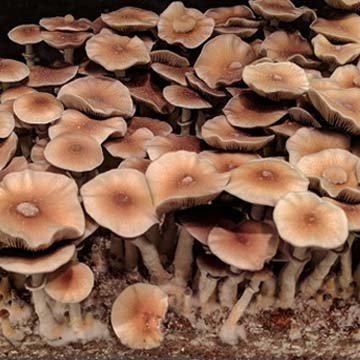
Description
Huautla Oaxaca Spores: Mycology, Taxonomy and Cultural History
Introduction to Huautla Oaxaca
Huautla de Jiménez is a town in the Sierra Mazateca region of Oaxaca, southern Mexico. It has an important place in the history of ethnomycology, the scientific study of relationships between people and fungi.
The region is particularly well documented in research concerning traditional Mazatec knowledge and the history of fungal classification. Several species belonging to different fungal genera have been recorded in the wider region.
Huautla Oaxaca is a geographical designation, not a formally recognised scientific species name. Understanding the difference between geographical labels, informal variety names and scientific taxonomy is essential when interpreting mycological information.
Historical Mycological Research in Huautla de Jiménez
Scientific interest in the fungi of the Sierra Mazateca increased during the twentieth century. Researchers including Richard Evans Schultes, Rolf Singer, Roger Heim and R. Gordon Wasson contributed to the historical documentation of fungi in the region.
Research conducted during the 1930s and 1950s helped establish that the mushrooms associated with the Mazatec term teonanácatl did not represent just one species.
Historical literature discusses several fungi, including:
- Psilocybe cubensis, historically associated with the local name San Isidro.
- Psilocybe mexicana, documented in historical research from Mexico.
- Psilocybe caerulescens varieties, associated with the regional term derrumbe.
- Conocybe siligineoides, another species discussed in early ethnomycological literature.
These distinctions are important because the cultural and scientific history of Huautla involves multiple species rather than one universal mushroom classification.
Understanding Psilocybe cubensis
Psilocybe cubensis is a formally recognised fungal species belonging to the genus Psilocybe.
Its scientific classification is separate from informal names and geographical labels used in online discussions or commercial descriptions.
The species is studied in relation to fungal morphology, taxonomy, ecology, genetics and naturally occurring chemical compounds.
Historical references to P. cubensis in the Sierra Mazateca provide scientific context, but they do not prove that every specimen associated with a Huautla label belongs to the same genetic lineage.
The Diversity of Psilocybe Species in Oaxaca
Oaxaca is an important region in Mexican fungal research. Scientific literature documents multiple species within the genus Psilocybe, including species associated with different Indigenous communities and ecological environments.
The presence of several species in the same broader region demonstrates why geographical names should not be confused with scientific classifications.
For example, Psilocybe mexicana and Psilocybe cubensis are different species. Their historical and cultural associations should be described accurately rather than combined under one general label.
Mazatec Ethnomycological History
The Mazatec people have a long and significant relationship with the fungi of the Sierra Mazateca.
Traditional knowledge concerning fungi forms part of a wider cultural context involving language, community practices, spirituality and local ecological understanding.
María Sabina, a Mazatec healer from the region, became internationally known following the visits of foreign researchers during the 1950s. Her story is an important part of the history of modern ethnomycology.
However, the international attention brought to Huautla also had lasting consequences for the local community. Increased outside interest contributed to commercialisation and cultural pressures.
Responsible educational writing should recognise Mazatec knowledge as part of a living cultural tradition, rather than treating it simply as a source of commercial mushroom names.
What Are Fungal Spores?
Spores are reproductive structures produced by fungi. They are an important part of fungal biology and are studied in mycology to understand reproduction, biodiversity and evolutionary relationships.
Scientific investigations may examine characteristics such as:
- Spore shape and structure.
- Cell-wall characteristics.
- Surface appearance.
- Microscopic dimensions.
- Differences between documented specimens.
Spore observations can contribute to taxonomic research, although individual microscopic characteristics should be considered alongside other scientific evidence.
Scientific Identification and Taxonomy
Modern fungal taxonomy uses several forms of evidence, including morphological examination, Huautla Oaxaca Spores, DNA sequencing and comparisons with authenticated reference specimens.
Historical identification records can sometimes contain errors or reflect the scientific knowledge available at the time. Modern research can therefore revise earlier classifications.
A geographical designation such as Huautla Oaxaca cannot independently establish the species, genetic identity or provenance of an individual specimen.
Reliable identification requires appropriate scientific evidence and careful documentation.
Geographical Labels and Scientific Names
It is useful to distinguish between different types of fungal terminology:
Scientific species name: A formal taxonomic designation, such as Psilocybe cubensis.
Geographical designation: A reference to a country, region or town associated with historical documentation.
Informal variety name: A community or commercial label that may not have formal scientific recognition.
Verified specimen identity: An identification supported by appropriate scientific evidence.
These distinctions help maintain accuracy when discussing fungi associated with particular geographical regions.
Responsible Scientific Information
Mycological information should distinguish established research from anecdotal accounts and unsupported commercial descriptions.
Claims about genetic uniqueness, Huautla Oaxaca Spores, geographical origin, chemical composition or specific biological characteristics require independently verifiable evidence.
This article is intended for educational and historical reference. It does not provide instructions for cultivating, preparing or consuming controlled psychoactive substances.
UK Legal Considerations
The legal position of fungi and related materials depends on the substance and circumstances involved. In the UK, psilocybin and psilocin are controlled under the Misuse of Drugs Act 1971.
A geographical label or product description does not determine the legal status of an item. Anyone seeking clarification about a particular substance or specimen should consult current legislation or a qualified legal professional.
Frequently Asked Questions
Where is Huautla de Jiménez?
Huautla de Jiménez is located in the Sierra Mazateca region of Oaxaca, southern Mexico.
Why is Huautla important in mycology?
The town is historically significant because of research into the fungi of the Sierra Mazateca and the documentation of Mazatec ethnomycological knowledge.
Which Psilocybe species have been documented in Oaxaca?
Scientific literature records several species, including Psilocybe cubensis, Psilocybe mexicana and Psilocybe caerulescens.
Is Huautla Oaxaca a separate mushroom species?
No. Huautla Oaxaca is a geographical designation, not a formal scientific species classification.
What is ethnomycology?
Ethnomycology is the study of relationships between people and fungi, including traditional knowledge, cultural history and the role of fungi in different communities.
Do geographical names establish genetic identity?
No. A geographical label cannot independently verify the genetic identity or provenance of an individual specimen.
Conclusion
Huautla de Jiménez has an important place in Mexican mycological history and the study of Mazatec ethnomycological traditions.
Historical research from the region documents several different fungal species, demonstrating the importance of accurate taxonomy and careful interpretation of geographical names.
Understanding fungal biodiversity alongside the cultural history of the Sierra Mazateca provides a more complete and responsible account of this important region.
This article is provided for educational, historical and scientific reference purposes only.

Reviews
There are no reviews yet.