
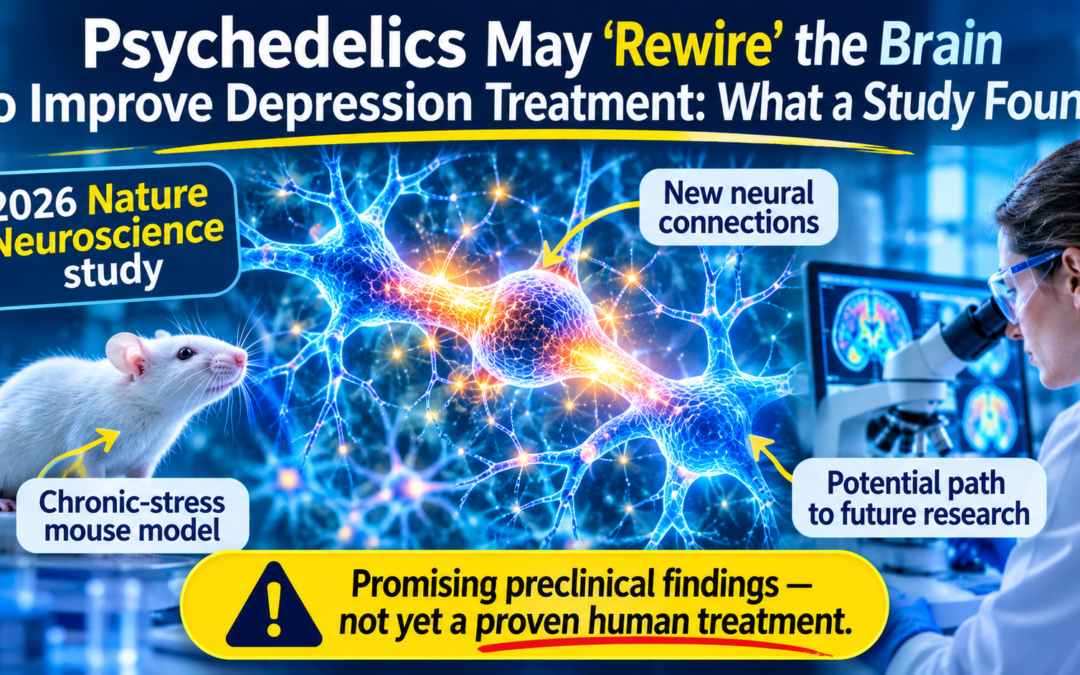
What Does It Mean When Scientists Say the Brain Can “Rewire” Itself?
The scientific term for the brain’s ability to change and reorganise its connections is neuroplasticity Psychedelics Treatment.
The brain contains billions of nerve cells called neurons. These cells communicate through specialised connections known as synapses, which help transmit information throughout the nervous system.
Neuroplasticity allows the brain to strengthen existing connections, form new ones and reorganise networks in response to experiences and changing conditions.
This ability is important for learning, memory and adaptation. Researchers are also investigating how changes in neural connections might relate to depression and other mental health conditions.
The recent study examined whether psilocybin could influence this process at a cellular level.
What Did the New Study Discover?
Researchers at the University of California, Santa Cruz, investigated how psilocybin affects connections between neurons.
The study, published in Nature Neuroscience on October 15, 2026, examined changes in the brains of laboratory mice.
The researchers observed that psilocybin promoted the formation and maturation of dendritic spines Psychedelics Treatment. These are tiny structures on neurons that receive signals from other nerve cells and help form synaptic connections.
The study also found that psilocybin influenced the removal of some existing connections.
This suggests that its effects involved reorganising neural circuits rather than simply increasing the total number of connections.
Importantly, the research was conducted in mice. It does not establish that the same changes produce improved depression symptoms in humans.
News+1
How Did Researchers Observe Brain Changes?
To investigate the effects, the research team used a specialised imaging technique called two-photon microscopy.
This technology allows scientists to observe very small structures in living tissue.
Using this approach, researchers followed individual dendritic spines over time and examined how their structure changed.
They found that psilocybin influenced the development and maturation of these structures.
The findings provided a closer look at how changes in individual neuronal connections may contribute to broader changes in brain networks.
Why Did Researchers Study Chronic Stress?
One of the most interesting parts of the study was the comparison between healthy mice and mice exposed to chronic stress.
Long-term stress can affect communication between neurons and is associated with changes in brain circuits involved in emotional regulation.
The researchers observed different responses in the two groups.
Findings in healthy mice
In healthy mice, psilocybin initially increased the formation of new dendritic spines. Over the following weeks, Psychedelics Treatment the number of connections moved closer to its previous level.
This suggested that the brain was reorganising its connections rather than simply accumulating more of them.
Findings in chronically stressed mice
The researchers observed a stronger increase in new dendritic spines in mice exposed to chronic stress.
They also found that psilocybin appeared to prevent some of the connection loss associated with the stress model.
These results suggest that the brain’s underlying condition may influence how its neural connections respond.
However, a mouse model of chronic stress cannot fully reproduce human depression. Further research is needed before these findings can be applied to clinical treatment.
Could Brain Rewiring Happen Without Psychedelic Effects?
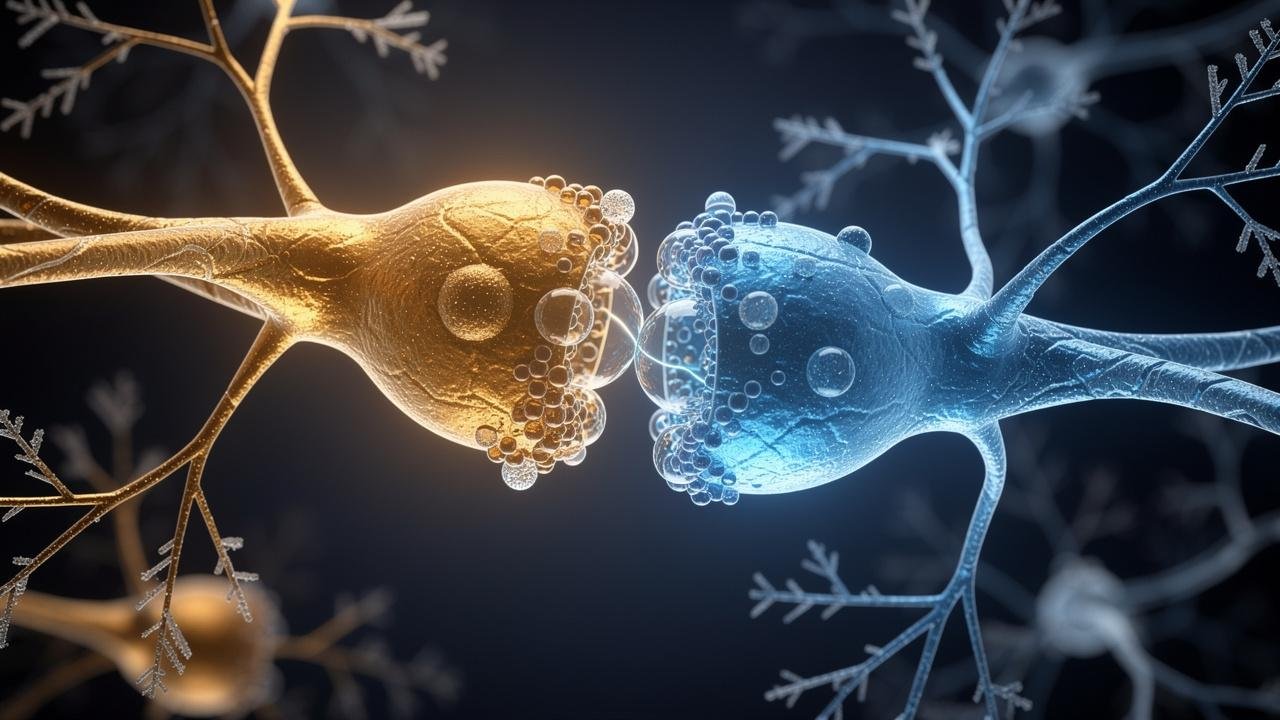
Another important part of the research involved serotonin 2A receptors.
These receptors are proteins found on certain brain cells and are involved in the effects of classic psychedelic substances.
The scientists investigated a group of neurons known as Layer 5 pyramidal neurons, Psychedelics Treatment, which play an important role in communication between different brain regions.
Using genetically modified mice, they examined whether the receptors involved in neural changes were also necessary for a behavioural response commonly used as a marker of psychedelic activity in rodents.
The results showed that the two effects could be separated:
The structural changes to neural connections depended on serotonin 2A receptor signalling in the specific neurons studied.
The characteristic mouse behavioural response could still occur without those receptors in the same neurons.
This suggests that the biological processes involved in neural plasticity may differ from those associated with psychedelic-related behaviour.
It is an important discovery, but it does not prove that scientists can already create an effective treatment without psychedelic effects. More research is necessary.
News
What Could This Mean for Future Depression Treatments?
The findings may help scientists understand how future treatments could influence the brain’s ability to adapt.
One possibility is that researchers could develop medicines that target neural plasticity without producing the same perceptual effects associated with psychedelic substances.
This is an area of investigation rather than an available treatment.
If future studies confirm that the relevant biological mechanisms also operate in humans, researchers may be able to explore new approaches to conditions involving disrupted neural circuits.
Potential research areas include:
Major depressive disorder.
Treatment-resistant depression.
Stress-related changes in brain function.
Other conditions involving altered neural connectivity.
The study does not establish that these conditions can be treated through the mechanism identified in mice. It provides a scientific direction for future investigation.
What Does Human Research Say About Psychedelics and Depression?
Animal studies are useful for understanding biological mechanisms, but human research is necessary to determine whether those mechanisms have clinical significance.
A 2026 review published in Journal of Affective Disorders examined 11 neuroimaging studies involving psilocybin research in people with major depressive disorder and treatment-resistant depression.
The review identified changes in brain network organisation following treatment. Some of these changes were associated with improvements in depression-related measurements.
However, the authors highlighted limitations, including small samples, overlapping datasets and potential research bias.
They concluded that more independent and carefully designed studies are needed.
ScienceDirect+1
A separate living systematic review published in Nature Mental Health examined 15 randomised controlled trials involving 801 participants.
Its initial analysis found reductions in depression scores in studies of psilocybin-assisted therapy compared with control conditions. However, the authors also identified limitations involving small studies and risk of bias.
These findings concern supervised clinical research and should not be confused with the mouse study or treated as proof that psychedelic substances are suitable for general use.
Nature
What Are the Limitations of the New Study?
Although the research provides useful scientific information, several limitations should be considered.
It was conducted in mice. Results from animal experiments cannot automatically be applied to human mental health conditions.
Brain changes do not automatically mean clinical improvement. Observing changes in neural connections does not prove that a person would experience fewer depressive symptoms.
Long-term effects require further study. Researchers need more information about how lasting these changes are and what they mean for brain function.
The underlying mechanisms are complex. The study identified particular cellular processes, but further research is needed to understand how they relate to behaviour and mental health.
Future treatments have not been established. The possibility of developing non-hallucinogenic medicines remains a research direction, not a proven medical option.
Why Is Neuroplasticity Important in Mental Health Research?
Neuroplasticity is an important subject because it helps scientists understand how the brain responds to its environment and experiences.
Research into depression has examined changes in networks involved in emotional regulation, attention, memory and self-focused thinking.
Understanding how these networks change could eventually help researchers identify new ways to study mental health conditions.
However, depression is complex. It involves biological, psychological and environmental factors, so no single change in brain connectivity can explain every person’s experience.
Future research needs to examine how brain changes relate to symptoms, everyday functioning and long-term wellbeing.
Frequently Asked Questions
What does it mean when psychedelics “rewire” the brain?
The phrase refers to changes in neural connections and brain networks. In the 2026 mouse study, researchers observed changes in the formation, maturation and removal of connections between neurons.
What did the 2026 study discover?
Researchers found that psilocybin promoted the formation and maturation of dendritic spines in mice. They also identified different cellular processes associated with neural plasticity and psychedelic-related behaviour.
Was the research conducted on humans?
No. The specific Nature Neuroscience study discussed here used laboratory mice. Separate human studies have examined brain connectivity and depression outcomes.
Does the study prove that depression can be treated by rewiring the brain?
No. It identifies a possible biological mechanism that may inform future research. It does not demonstrate a new treatment for depression.
Could future depression treatments work without psychedelic effects?
Researchers are investigating whether the biological processes involved in neural plasticity can be separated from psychedelic-related effects. This remains an experimental research direction.
Why is neuroplasticity important?
Neuroplasticity allows the brain to reorganise its connections. Scientists study it to better understand learning, memory, adaptation and changes associated with mental health conditions.
Are the findings relevant to other mental health conditions?
They may provide questions for future research into other conditions involving altered neural circuits. However, the study does not establish treatment effectiveness for depression, PTSD or other conditions.
Conclusion: A New Direction for Brain and Depression Research
The 2026 study provides new insight into how psilocybin can influence the structure and organisation of neural connections.
By observing changes in dendritic spines and identifying cellular processes associated with neural plasticity, researchers have gained a clearer understanding of how the brain may reorganise itself.
Perhaps the most important finding is that some of the cellular mechanisms associated with brain rewiring appear to be separable from a psychedelic-related behavioural response in mice.
This could inform future research into treatments that target neuroplasticity without producing psychedelic effects.
Nevertheless, the findings remain preliminary. The study was conducted in animals, and additional human research is needed to determine whether the same mechanisms could contribute to effective depression treatments.
For now, the research represents an important scientific development, not proof of a new treatment.
References
1. Baker, J. J., Kogan, E., Ma, S., Lu, J., & Zuo, Y. (2026). 5-HT2A receptors in layer 5 pyramidal neurons mediate the neuroplastic but not the hallucinogenic effects of psilocybin. Nature Neuroscience.
News+1
2. Sabbah, S. G., et al. (2026). Temporal dynamics in neuroimaging as correlates of therapeutic response to psilocybin in major depressive disorder: A systematic review and critical appraisal. Journal of Affective Disorders.
ScienceDirect+1
3. A living systematic review, meta-analysis and open-data resource of randomized controlled trials of psilocybin treatment for symptoms of depression (2026). Nature Mental Health.
Nature
4. University of California, Santa Cruz. (2026). How psilocybin reshapes brain circuits.

What Are Penis Envy Mushrooms? Appearance, Classification and Science
What Are Penis Envy Mushrooms? A Scientific Overview Penis Envy mushrooms are a named variety of Psilocybe cubensis, a species of mushroom known for containing the naturally occurring psychedelic compound psilocybin. They are not a separate mushroom species....

What are the benefits of lion’s mane mushrooms?
Introduction benefits of lion’s mane mushrooms Lion’s mane mushrooms have attracted growing attention because of their unusual appearance and their potential health benefits. Recognisable by their long,benefits of lion’s mane mushrooms white, cascading spines, these...
Can microdosing psilocybin, the compound in magic mushrooms, aid mental health?
Could psychedelic substances change the way the brain processes emotions? This question has attracted growing scientific interest as researchers investigate new approaches to understanding depression, anxiety and mental health Psilocybin microdosing. One area...
Can Psilocybin Microdosing Aid Mental Health? What Research Actually Shows
Interest in psychedelic research has grown as scientists investigate new ways to understand depression, anxiety and emotional wellbeing. One subject attracting attention is psilocybin microdosing and mental health, particularly claims that small amounts of psilocybin...

Psychedelic Mushroom Microdosing and Mental Health: What Does the Science Really Say?
Psychedelic Mushroom Microdosing and Mental Health: What Does the Science Really Say in 2026? Mental health has become an increasingly important subject in modern healthcare, with researchers exploring new ways to understand psychological well-being, emotional...
Magic Mushrooms UK: Species, Science & Legal Guide
Magic mushrooms are a group of fungi associated with naturally occurring psychedelic compounds, particularly psilocybin and psilocin. They have attracted interest from researchers Magic mushrooms Chocolate, historians, mycology enthusiasts and the wider public because...