
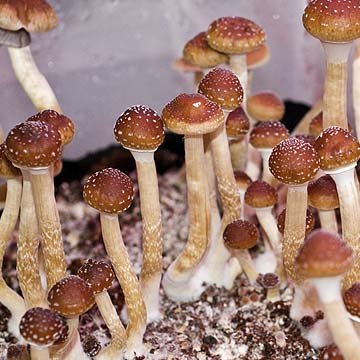
Description
Malaysia Spores: Mycology, Taxonomy and Scientific Background
Introduction to Malaysia Spores
Malaysia has a documented place in the historical study of tropical fungi. Mycological literature has recorded Psilocybe cubensis specimens from Malaysia, contributing to wider discussions about fungal diversity and the distribution of fungi in Southeast Asia.
The term Malaysia Spores is a geographical label rather than a recognised scientific species name. Understanding the distinction between geographical descriptions, informal variety names and formal fungal taxonomy is important when examining this subject.
This educational guide covers the scientific background of Psilocybe cubensis, historical Malaysian records, fungal spore biology and the importance of reliable taxonomic identification.
Historical Mycological Records from Malaysia
Historical ethnomycological publications describe field collections of Psilocybe cubensis in Malaysia. These records form part of the broader documentation of tropical fungi in Southeast Asia.
Such historical reports are useful for understanding the recorded distribution of fungi. However, they should not be interpreted as proof that every specimen carrying a Malaysian label has the same genetic identity or originates from a particular location.
A geographical name may describe a reported collection area, a historical reference or an informal community designation. These meanings are not interchangeable.
Understanding Psilocybe cubensis
Psilocybe cubensis is a formally named fungal species within the genus Psilocybe. Its scientific classification is documented in taxonomic databases and mycological literature.
Scientific names provide a standard way to refer to organisms across different languages and regions. They also help distinguish recognised species from informal labels that may vary between historical records and commercial descriptions.
The classification of fungi can change as researchers gather new morphological, molecular and genetic evidence. For that reason, reliable identification should be based on documented scientific evidence rather than a name alone.
What Are Fungal Spores?
Spores are reproductive structures produced by many types of fungi. They are an important part of fungal biology and contribute to the reproduction and dispersal of fungal organisms.
Mycologists study spores as part of broader investigations into fungal classification, biodiversity and evolutionary relationships.
Microscopic research may examine characteristics such as:
- Spore shape and structure.
- Cell-wall characteristics.
- Surface appearance.
- Microscopic dimensions.
- Differences between fungal specimens.
These observations can contribute to scientific descriptions, although individual microscopic characteristics should not be treated as definitive identification on their own.
Malaysia as a Geographical Mycology Reference
Malaysia’s tropical environment supports a wide diversity of fungal organisms. Its ecological conditions and biodiversity make the region relevant to research into tropical fungi.
Historical records of Psilocybe cubensis in Malaysia provide one example of how regional observations contribute to the scientific record.
However, the existence of historical records does not establish the provenance of a modern specimen. A geographical product name should therefore be understood as a label unless independently supported by collection records or other verifiable documentation.
Scientific Identification and Genetic Research
Modern fungal taxonomy can draw on several forms of evidence, including morphological examination, DNA sequencing and comparisons with documented reference specimens.
Research has also highlighted challenges in fungal identification. A scientific study examining preserved Psilocybe specimens found substantial problems with historical identifications and inconsistencies in some sequence records.
This illustrates why careful documentation matters. A familiar name, geographical label or visual description cannot independently establish genetic identity.
Informal Names Versus Scientific Classification
It is useful to distinguish three different types of information:
Scientific species name: A formal taxonomic name, such as Psilocybe cubensis.
Geographical designation: A name referring to a country or region associated with a historical report or informal label.
Verified specimen identity: A conclusion supported by appropriate scientific evidence and documentation.
The term Malaysia Spores should not automatically be interpreted as a formally recognised subspecies, genetically distinct variety or independently verified geographical lineage.
Responsible Scientific Information
Accurate information about fungi should distinguish historical reports from modern scientific findings and unverified descriptions.
Claims about genetic uniqueness, geographical provenance Malaysia Spores, chemical composition or other specific characteristics require reliable supporting evidence.
This page is intended to provide educational information about fungal taxonomy, historical records and spore biology. It does not provide instructions for cultivating, preparing or consuming controlled psychoactive substances.
UK Legal Considerations
The legal position of fungi and related materials depends on the substance and circumstances involved. In the UK, psilocybin and psilocin are controlled under the Misuse of Drugs Act 1971.
A geographical label or product description does not determine the legal status of an item. Anyone seeking clarification about a particular substance or specimen should consult current legislation or a qualified legal professional.
Frequently Asked Questions
What does Malaysia Spores mean?
Malaysia Spores is a geographical designation used in connection with fungal and mycological terminology. It is not, by itself, a formal scientific species name.
Is Psilocybe cubensis documented in Malaysia?
Historical ethnomycological literature reports collections identified as Psilocybe cubensis in Malaysia. These reports contribute to the historical record of fungi in the region.
Is Malaysia a separate species of mushroom?
No. Malaysia is a geographical name, not a recognised scientific species classification.
What is the scientific name associated with these historical records?
Historical Malaysian records include specimens identified as Psilocybe cubensis. The scientific name refers to a recognised fungal species.
Why are fungal spores studied?
Fungal spores are studied to understand fungal reproduction, classification, biodiversity and evolutionary relationships.
Does a geographical name prove where a specimen originated?
No. A geographical label does not independently verify the origin or genetic identity of an individual specimen.
Conclusion
Malaysia has a documented place in historical research concerning tropical fungi, including published reports of Psilocybe cubensis. These records provide useful context for understanding fungal biodiversity and the history of mycological research in Southeast Asia.
The distinction between geographical labels and formal scientific taxonomy remains important. Reliable identification depends on appropriate evidence, careful documentation and recognised scientific methods.
This article is provided for educational and scientific reference purposes only.
Reviews
There are no reviews yet.