
Description
Nepal Chitwan Spores: Mycology, Taxonomy and Scientific Background
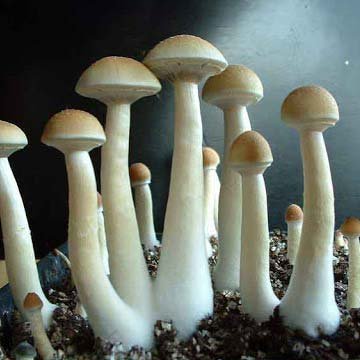
Nepal Chitwan spores are associated with an informally named variety of Psilocybe cubensis, a fungal species studied in mycology and scientific research. The name refers to the Chitwan region of Nepal, an area known for its subtropical landscapes and biodiversity.
This educational guide explores the geographical background of the name, fungal classification, spore biology and microscopic research. It also explains the importance of distinguishing documented scientific information from informal variety descriptions.
What Are Nepal Chitwan Spores?
Nepal Chitwan is an informal geographical designation associated with Psilocybe cubensis. It is not a separate formally recognised fungal species.
The name connects the variety with the Chitwan region in southern Nepal. However, the precise collection history and genetic identity of individual specimens carrying this designation may vary.
A geographical name alone cannot establish the origin or genetic characteristics of a particular specimen.
Understanding Psilocybe Cubensis
Psilocybe cubensis is a recognised species belonging to the genus Psilocybe.
The species has attracted scientific interest because of its biological characteristics, taxonomy and naturally occurring chemical compounds.
Several informal geographical and variety names are associated with this species. These designations should not be confused with formal scientific species classifications.
The Chitwan Region of Nepal
Chitwan is a region in southern Nepal recognised for its subtropical environment, grasslands, forests and diverse wildlife.
The region provides an important geographical context for mycological research. Scientific literature has documented several Psilocybe species in Nepal, including research involving specimens collected in the Chitwan area.
However, the existence of wild Psilocybe species in a region does not independently prove the precise origin of every specimen sold under a geographical variety name.
Fungal Spore Biology
Spores are microscopic reproductive structures produced by fungi. They play an important role in fungal biology and are studied to understand fungal diversity, classification and reproduction.
In mycological research, scientists examine characteristics such as spore shape, pigmentation and microscopic structure.
These observations can contribute to fungal identification, although individual characteristics should not be treated as definitive proof of a particular informal variety.
Microscopy and Scientific Identification
Microscopy is an established technique used to investigate fungal morphology and classification.
Researchers examine microscopic structures to understand differences between fungal groups and document biological characteristics.
A microscope observation alone cannot necessarily establish the geographic origin or genetic identity of a specimen. Reliable identification requires appropriate scientific evidence and specimen documentation.
Geographic Varieties and Scientific Classification
Names such as Nepal Chitwan, Amazonian and Mazatapec are commonly encountered in informal Psilocybe cubensis classifications.
These names may reflect reported geographical associations or historical collection descriptions. However, they do not have the same taxonomic status as formally recognised species.
It is important to distinguish between a scientific species name, an informal variety designation and a verified genetic lineage.
UK Legal Considerations
The legal position of fungal spores and related materials depends on the substances involved and the circumstances.
Psilocybin and psilocin are controlled under the UK’s Misuse of Drugs Act 1971. The legal position of spores should not be assumed from a product description or a seller’s statement about intended use.
Anyone seeking guidance about possession or other activities involving these materials should consult current UK legislation or a qualified legal professional.
Frequently Asked Questions
What are Nepal Chitwan spores?
Nepal Chitwan is an informal geographical designation associated with Psilocybe cubensis. It is not a separate formally recognised fungal species.
Where does the Nepal Chitwan name come from?
The name refers to the Chitwan region of southern Nepal. However, the exact provenance of individual specimens carrying this designation may not be independently documented.
Is Nepal Chitwan a separate mushroom species?
No. The name is generally used as an informal variety designation associated with Psilocybe cubensis.
What is the scientific importance of fungal spores?
Spores are important reproductive structures studied in mycology. They help researchers investigate fungal biology, morphology and biodiversity.
Can microscopy confirm the exact geographical variety?
Not necessarily. Microscopic observations can contribute to fungal identification, but they cannot independently establish a specimen’s geographical origin or genetic lineage.
What is the UK legal position?
Psilocybin and psilocin are controlled substances under UK law. The legal position of spores and related materials depends on the applicable legislation and circumstances.
Final Information
Nepal Chitwan is an informal geographical designation associated with Psilocybe cubensis. Its scientific interest lies in the wider study of fungal diversity, geographical associations and microscopic characteristics.
Understanding the difference between verified scientific findings and informal variety descriptions is essential when evaluating information about these fungi.
This article is provided for educational and scientific information only. It does not provide cultivation instructions, medical advice or recommendations for consuming psychoactive substances.
Reviews
There are no reviews yet.