
Description
Z-Strain Spores: Scientific Background and Microscopy Information
Introduction to Z-Strain Spores
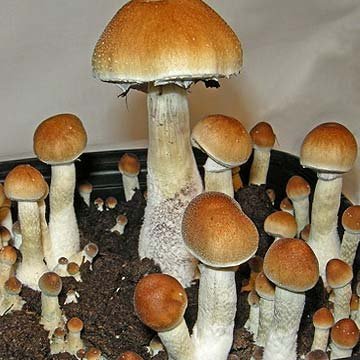
Z-Strain is a commonly used informal name associated with a variety of Psilocybe cubensis, a species of mushroom studied in mycology. The name is widely recognised in online mushroom-related discussions, although it should not be treated as a formally established taxonomic classification.
This page provides educational information about the terminology, biological characteristics and scientific context associated with Z-Strain spores. Its focus is fungal biology and microscopy observation.
What Are Z-Strain Spores?
Spores are microscopic reproductive structures produced by fungi. They play an essential role in fungal reproduction and dispersal and are an important subject in mycological research.
In mushroom-forming fungi, spores are generally produced on specialised structures beneath the cap. Once released, they can be dispersed through the surrounding environment.
The term “Z-Strain spores” refers to spores attributed to a named variety of Psilocybe cubensis. Informal strain names are frequently used in hobbyist and online communities, but they do not necessarily represent scientifically verified genetic lineages.
Understanding Psilocybe cubensis
Psilocybe cubensis is a species of mushroom belonging to the fungal kingdom. It has been the subject of taxonomic, ecological and chemical research.
It is important to distinguish between the identification of a fungal species and the informal names used to describe particular varieties. Names such as Z-Strain are not equivalent to formal scientific species names.
Scientific identification relies on a combination of characteristics and, where appropriate, laboratory analysis. A common name alone is not sufficient to establish the identity or genetic characteristics of a specimen.
The Biological Role of Fungal Spores
Fungal spores are fundamental to the life cycles of many fungi. Their principal biological functions include:
- Reproduction: Spores are involved in the reproductive cycle of fungi.
- Dispersal: Microscopic spores can travel through the surrounding environment.
- Genetic variation: Sexual reproduction in fungi can contribute to genetic diversity.
- Ecological function: Fungi play important roles in natural ecosystems, including the decomposition of organic material.
Spore morphology can vary between fungal groups. Characteristics studied by mycologists may include shape, dimensions, surface features and pigmentation.
Microscopy and Mycological Observation
Microscopy is an important technique in fungal research. It allows researchers to examine structures that cannot be observed clearly with the naked eye.
In general mycology, microscopic examination can help investigate:
- Spore shape and appearance.
- Differences in microscopic structures between fungal groups.
- Features used in taxonomic identification.
- Variation in fungal morphology.
Microscopic observations should be interpreted carefully. A single visual characteristic does not necessarily provide enough evidence to identify a fungal species or confirm a particular variety.
Reliable identification may require several complementary methods and appropriate scientific expertise.
Z-Strain: Naming and Classification
The name Z-Strain is an informal designation rather than a separate scientific species. It is commonly associated with Psilocybe cubensis in non-academic discussions.
Informal strain terminology can be inconsistent. Different sources may use the same name without providing independently verified evidence that the material represents a distinct genetic lineage.
For this reason, scientific descriptions should distinguish between:
- The formally recognised species name.
- Informal variety or strain terminology.
- Verified taxonomic or genetic information.
- Claims that have not been independently established.
This distinction helps prevent informal terminology from being mistaken for established scientific classification.
Legal and Regulatory Considerations
Laws concerning psychoactive fungi and related materials differ between countries and may depend on the specific substance, material, intended use and circumstances.
In the United Kingdom, psilocybin and psilocin are controlled substances under the Misuse of Drugs legislation. The legal position concerning particular fungal materials, including spores, can involve distinctions that should not be reduced to a general statement that all materials are automatically lawful or unlawful.
Anyone researching or handling materials associated with psychoactive fungi should check the legislation applicable in their jurisdiction and obtain qualified legal advice where necessary.
Nothing on this page should be interpreted as legal advice or as confirmation that possession, importation, sale or any particular use is lawful.
Frequently Asked Questions
What are Z-Strain spores?
Z-Strain is an informal name associated with a variety of Psilocybe cubensis. The term is used in mushroom-related communities, but it is not a separate formal scientific species classification.
Are Z-Strain spores a separate species?
No. The name Z-Strain is generally used as an informal variety designation associated with Psilocybe cubensis. It should not be confused with a formally recognised species name.
What is the scientific purpose of studying fungal spores?
Fungal spores are studied to understand reproduction, dispersal, morphology, biodiversity and fungal classification. Microscopy is one method used to examine their microscopic characteristics.
Can microscopy confirm a mushroom’s identity?
Microscopy can provide useful identification evidence, but one microscopic feature alone is not necessarily conclusive. Reliable identification may require several characteristics and specialist analysis.
Are Z-Strain spores legal?
The legal position depends on the jurisdiction and the specific circumstances. Laws relating to psilocybin-containing fungi and associated materials can be complex. Check current local legislation and seek qualified legal advice rather than relying on a general online statement.
Is Z-Strain a formally recognised scientific classification?
Z-Strain is an informal designation. It is not a separate species name in formal fungal taxonomy.
Educational Information
This page is intended for general mycological education and scientific background. It does not provide instructions for cultivating psychoactive fungi, producing controlled substances, preparing psychoactive materials or consuming them.
Scientific terminology should be interpreted in the context of established mycology, and legal requirements should always be checked in the relevant jurisdiction.
Editorial note: This information is educational and is not a substitute for professional scientific or legal advice.
Reviews
There are no reviews yet.